Learning Outcomes:
i. Students will define pollution and deforestation.
ii. They will understand the detrimental effects of deforestation on biodiversity.
iii. Students will be able to identify the reasons why deforestation occurs and propose strategies to mitigate its impacts.
Summary of Lesson:
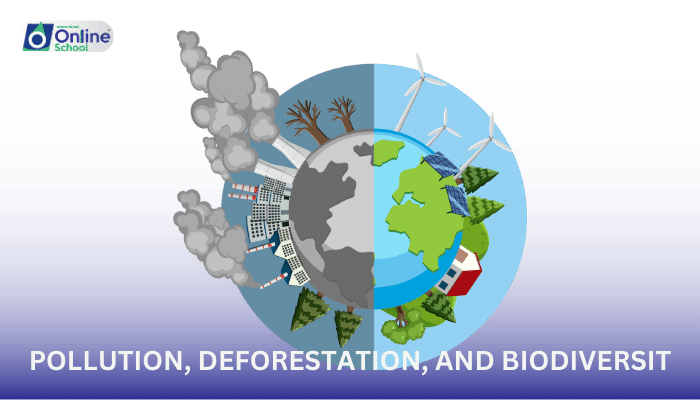
In this lesson, we'll uncover how human actions like pollution and cutting down forests can hurt the vast web of life that makes up Earth's biodiversity. By the end, you'll understand what deforestation is, why it happens, and how it can lead to less biodiversity.
i. What is Pollution?
Pollution is when harmful substances get into our air, water, or land, where they can damage the environment. It's like when something dirty gets into clean water, making it unsafe to use.
ii. Understanding Deforestation:
Deforestation is the cutting down of large areas of forests. It's like taking away the home of animals and plants, leaving them with nowhere to live.
iii. Effects of Deforestation on Biodiversity:
We'll learn how deforestation can lead to fewer trees, which means less habitat for wildlife, poorer air quality, and more greenhouse gases in the atmosphere. This makes it hard for all kinds of life to survive.
iv. Causes of Deforestation:
Discover why forests are being cut down, from clearing land for farms to harvesting trees for timber and making way for cities.
v. Combating Deforestation:
We'll talk about ways to stop deforestation, like using land more wisely, planting more trees, and protecting large areas of forests.
List of Important Questions for Self-Study:
i. What is pollution and what are its main types?
ii. How does deforestation affect the animals and plants in a forest?
iii. Why is deforestation a concern for biodiversity?
iv. What causes deforestation?
v. How does deforestation contribute to climate change?
vi. What are some ways we can prevent deforestation?
vii. Can you think of how deforestation might affect your local area?
viii. What role do trees play in maintaining a healthy environment?
ix. Why is it important to balance human needs with the health of the environment?
x. How can reforestation help in restoring biodiversity?
Important Terminologies Used in Lesson:
i. Pollution: The presence or introduction of harmful substances or products into the environment.
ii. Deforestation: The clearing, destroying, or otherwise removal of trees through deliberate, natural, or accidental means.
iii. Biodiversity: The variety of plant and animal life in the world or in a particular habitat, a high level of which is usually considered to be important and desirable.
iv. Greenhouse Gases: Gases that trap heat in the atmosphere, contributing to global warming.
v. Reforestation: Planting of trees in an area where the forest has been cut down.
vi. Sustainable Development: Economic development that is conducted without depletion of natural resources.
